Quick Answer for Travelers
The Hanoi Old Quarter (Khu Pho Co) is an intact medieval urban grid of narrow streets directly north of Hoan Kiem Lake. Dating to King Ly Thai To's founding of the capital in 1010, the district was historically divided into 36 artisan guilds where each lane produced and traded a specific craft. Today, the area is free to wander 24/7. Key heritage stops include the 19th-century Heritage House at 87 Ma May (open 08:00–17:00, 10,000 VND), Bach Ma Temple on Hang Buom (Hanoi's oldest temple, free entry), and the bustling street food corridors of Hang Buom and Ta Hien.
Fast Facts at a Glance
| Location | Hoan Kiem District, north of Hoan Kiem Lake, south of Long Bien Rail Bridge |
|---|---|
| Time Needed | Half-day (3 to 4 hours) for a walking route; full day to browse markets and craft workshops |
| Opening Hours | Public district open 24/7; retail shops typically 08:30–21:30; street food stalls operate 06:30–23:00 |
| Admission Fee | Free entry throughout the neighborhood; Heritage House 87 Ma May entry is 10,000 VND |
| Best Time to Visit | 08:00–10:30 for photography and quiet morning market activity; 17:30–22:00 for street gastronomy |
| Nearest Transit | Hanoi Central Railway Station is 1.8km southwest; Long Bien bus interchange is 600m northeast |
| Ideal For | Heritage walkers, culinary travelers, architecture enthusiasts, street photographers |
Why Go: A Living Medieval Commercial Grid
Most historic Asian cities lost their medieval residential cores to rapid twentieth-century modernization. The Hanoi Old Quarter is a rare surviving exception. Rather than being preserved as a sanitized, museum-style replica, it remains the dense, chaotic, sensory engine of northern Vietnamese commerce. Over thirty thousand families live and work in an urban footprint measuring approximately one hundred hectares, creating an extraordinary density where front rooms function as retail storefronts, back rooms house generational families, and upper floors support rooftop altars and herb gardens.
The origins of the quarter trace to the 11th century when King Ly Thai To relocated the royal court from Hoa Lu to Thang Long (modern Hanoi). The royal citadel required metalworkers, silversmiths, potters, carpenters, and weavers to construct palaces, equip soldiers, and dress courtiers. Guild craftsmen migrated en masse from rural delta villages across the Red River basin, establishing workshops along natural waterways and moats that drained into the Red River. By the 15th century, during the Later Le dynasty, royal administration formalized these settlements into thirty-six distinct wards, known as 36 Pho Phuong.
Each craft guild built its own Dinh (communal hall) dedicated to the patron deity who originally invented the craft. Even today, as you navigate Hang Bac (Silver Street), Hang Gai (Silk Street), or Hang Chieu (Mat Street), you will observe that merchants selling identical merchandise cluster shoulder to shoulder. In traditional Vietnamese merchant philosophy, this spatial concentration is not perceived as detrimental competition; rather, as the local proverb states, "Buon co ban, ban co phuong" (you need partners to trade and a guild to sell), clustering creates a reliable central marketplace for buyers and stabilizes wholesale supply chains.
The Architecture of the Tube House (Nha Ong)
The hallmark architectural typology of the Old Quarter is the ancient tube house, or Nha Ong. Strolling along Hang Buom or Ma May, look closely at the building frontages. Houses rarely exceed three to four meters in width, yet they extend backward twenty to sixty meters, occasionally terminating on an entirely different street. This curious geometry evolved due to multiple historical factors:
- Colonial and Feudal Property Taxation: In both dynastic Vietnam and early French colonial administration, municipal taxation was calculated according to the physical width of the street facade. Merchants realized that by purchasing a narrow entrance and building deep rectangular footprints, they minimized commercial tax burdens while maximizing total square footage.
- Interior Light Wells & Courtyards (San Troi): Because tube houses share party walls with neighbors on both sides, they lack exterior side windows. Master builders compensated by dividing the home into progressive linear pavilions separated by open-air inner courtyards. Rain fell directly into courtyard drainage troughs, while convective air currents drew cool drafts through the ground level, maintaining natural ventilation in Hanoi's humid tropical climate.
- Functional Hierarchy: The front ground-floor room served as the customer-facing boutique or workshop. The second pavilion housed the reception salon and ancestors' altar. The inner pavilions served as private sleeping quarters, kitchens, and latrines, ensuring that merchant business remained strictly insulated from family domestic life.
To examine a masterfully restored 19th-century example, visit the Heritage House at 87 Ma May Street. Built at the end of the Nguyen dynasty by a wealthy herbal medicine merchant, the two-story wooden dwelling features hand-carved ironwood beams, slate stone courtyards, and antique ceramic furnishings.
Key Guild Streets to Explore on Foot
While the modern Old Quarter encompasses more than seventy individual streets, these specialized thoroughfares provide the deepest immersion into guild heritage:
- Hang Bac (Silver Street): Hanoi's premier jewelry quarter for over five centuries. Established by silversmiths from Dinh Cong village and Hai Duong province who minted silver bullion for the royal court. Today, gold merchants, coin dealers, and fine filigree jewelers continue to operate side by side. Visit Dinh Kim Ngan at 42–44 Hang Bac, the grand communal hall dedicated to the patron founder of silversmithing.
- Hang Ma (Paper Offerings Street): The most visually vibrant street in the quarter. For hundreds of years, artisans here fabricated votive paper offerings (Vang Ma)—miniature paper houses, bank notes, motorbikes, and horses burned at ancestor altars during funeral ceremonies and the lunar new year. During the Mid-Autumn Festival and Tet, Hang Ma becomes a sea of crimson lanterns, paper drums, and dragon dance masks.
- Hang Gai (Silk Street): Linking Hoan Kiem Lake to Hang Da Market, Hang Gai is the historical epicenter of the silk trade. Tailoring ateliers, embroidery shops, and family-owned silk merchants occupy historic colonial facades, with several shops maintaining private wooden looms in back rooms.
- Hang Buom (Sails Street): Historically located along the To Lich River bank where sailing junks docked to load supplies. Chinese merchants settled here in the 17th century, constructing guild halls and temples. Visit Bach Ma Temple at 76 Hang Buom, founded in the 11th century to honor the sacred White Horse that guided King Ly Thai To during the laying of Hanoi's first city walls.
- Hang Dong (Brass & Bronze Street): The clatter of metal hammers still echoes along this street, where artisans shape ceremonial brass incense burners, gongs, and cooking cauldrons originally introduced from the bronze casting villages of Bac Ninh province.
Photographic Gallery: Old Quarter Atmosphere
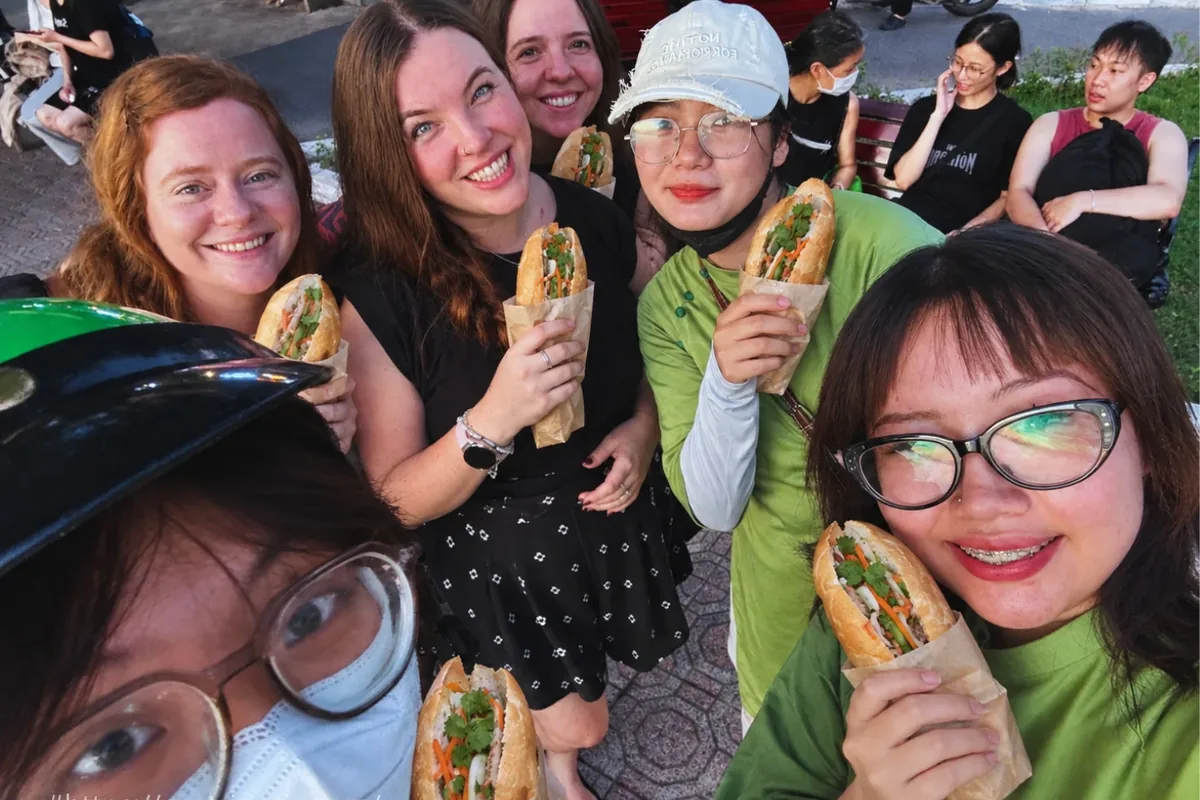
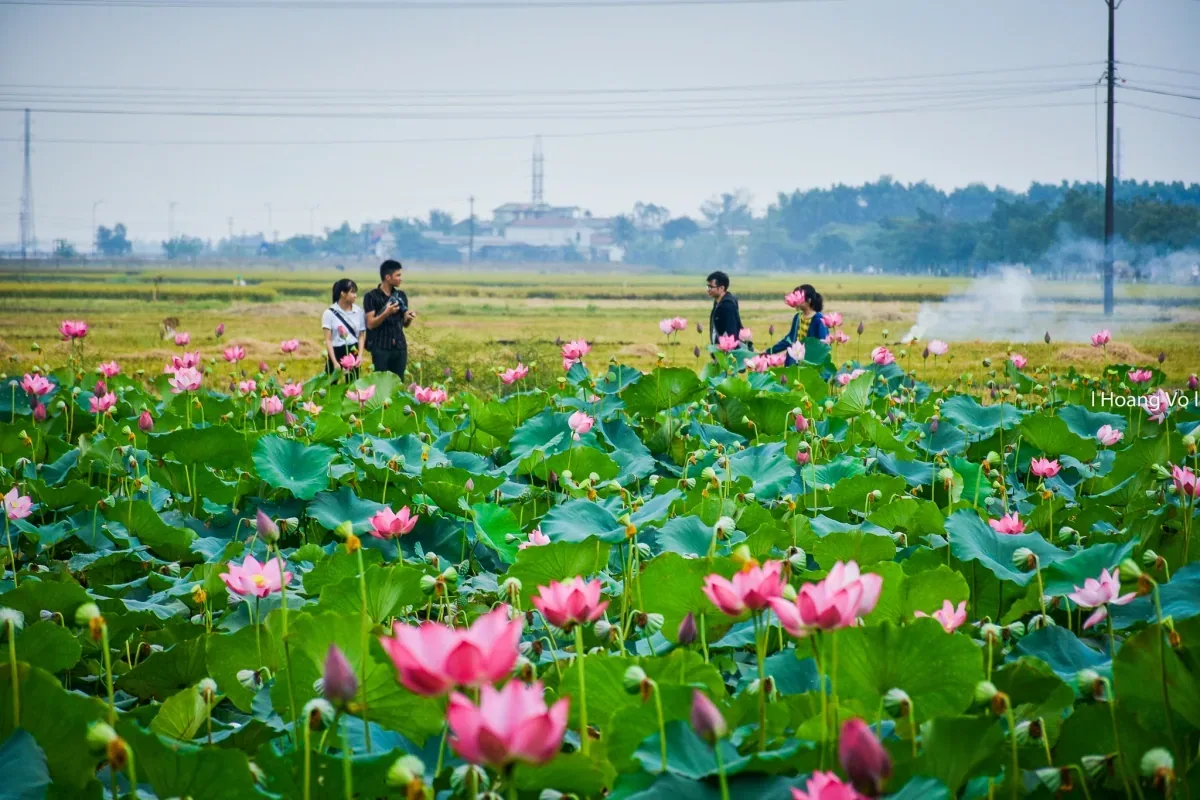
Street Food Navigation in the Guild Streets
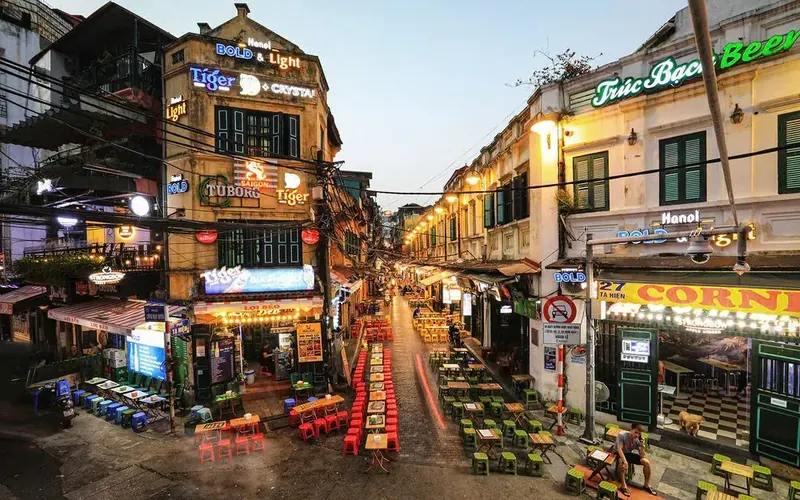
Gastronomy is inseparable from the Old Quarter's urban fabric. Because historic houses lacked spacious individual kitchens, residents historically relied on communal street vendors who cooked regional specialties perfected over generations. When dining in the quarter, look for small single-dish stalls where the cook prepares only one recipe:
- Bun Cha Huong Lien or Hang Quat: For charcoal-grilled pork patties served over thin rice vermicelli and tangy green papaya broth, head to Lane 74 Hang Quat. For complete dining context, consult our comprehensive Hanoi bun cha guide.
- Banh Cuon Gia An or Ba Xuan: Steamed fermented rice sheets rolled with minced wood-ear mushrooms and seasoned pork, sprinkled with crispy shallots and dipped in warm fish sauce broth.
- Cha Ca Thang Long: Located at 19–21 Duong Thanh Street on the western perimeter of the quarter, this family-run restaurant serves turmeric-marinated snakehead fish fillets fried tableside with mounds of fresh dill and spring onions.
- Pho Bo Traditional Stalls: Sample century-old broth techniques at Pho Gia Truyen (49 Bat Dan) or Pho 10 Ly Quoc Su. Explore our full culinary review in the Hanoi pho bo guide.
The Street Crossing Rule: Navigating Old Quarter traffic can be intimidating for newcomers. Remember that motorcyclists travel at moderate speeds and constantly look for gaps. Never make sudden running dashes or freeze abruptly. Keep your head up, establish eye contact with approaching drivers, and maintain a steady walking rhythm. If you feel nervous, shadow a local resident carrying market bags across the street.
Unravel the Secret Alleys of the Old Quarter
Eco Trip Asia's licensed guides lead small-group walking tours and vintage open-top jeep excursions that access hidden communal temples, private tube house courtyards, and family-run artisan workshops away from the standard tourist path.
All tours operated directly by Vietnam Green Travel Co., Ltd (Licence 01-3022/2025/CDLQGVN-GP LHQT). Transparent flat pricing with zero booking markups.
Frequently Asked Questions About the Old Quarter
Is there an entrance fee for the Hanoi Old Quarter?
The Old Quarter is a living public residential and commercial district with free public access 24/7. Specific preserved heritage sites within the quarter, such as the Ancient House at 87 Ma May or Bach Ma Temple, charge modest admission fees between 10,000 and 20,000 VND ($0.40–$0.80 USD).
What are the 36 Guild Streets in Hanoi?
The 36 Guild Streets (36 Pho Phuong) originated in the 15th century when artisans from surrounding handicraft villages gathered in Hanoi, each street specializing in one trade. Streets begin with 'Hang' (meaning merchandise), such as Hang Bac (silver), Hang Gai (silk), Hang Ma (paper goods), and Hang Chieu (woven mats).
How do you cross the street safely in the Old Quarter?
Step off the curb calmly at a consistent, predictable walking pace. Do not run, hesitate suddenly, or step backward. Motorcyclists calculate your forward momentum and will steer gently around your path. Making eye contact with approaching riders helps maintain safety.
What is an ancient tube house in Hanoi?
Tube houses (Nha Ong) are historic merchant dwellings characterized by narrow street frontages (typically 2 to 4 meters wide) and immense depth extending 20 to 60 meters back. This architectural style developed due to 19th-century municipal property tax laws assessed on street frontage width rather than total floor area.
When does the Hanoi Old Quarter Night Market open?
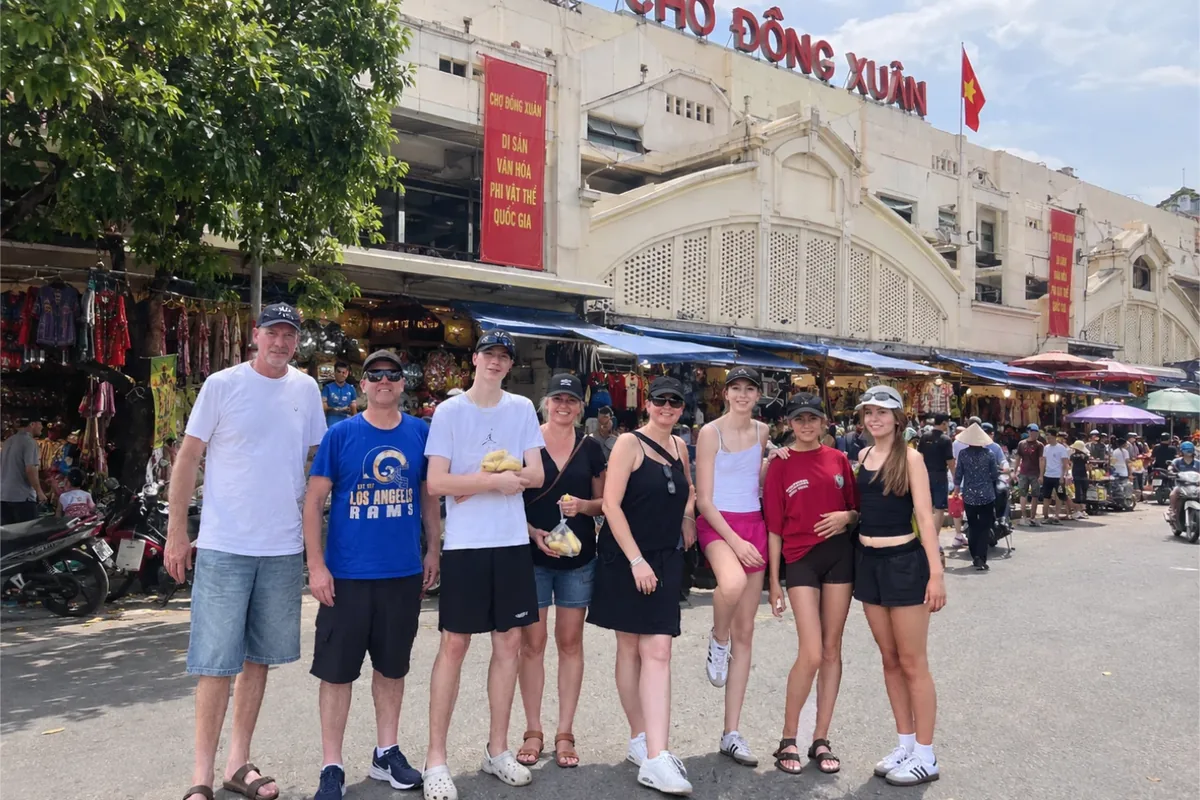
The Old Quarter Night Market runs on Friday, Saturday, and Sunday evenings from 18:00 to 23:00 along Hang Dao, Hang Ngang, and Hang Duong streets all the way to Dong Xuan Market. Motorized traffic is excluded during market hours.
Nearby Sights to Combine with the Old Quarter
Easily reachable on foot from the center of the Old Quarter: