Quick Answer for Travelers
Hanoi Train Street is a functioning single-track section of the North-South Railway running directly between residential houses in central Hanoi. The two primary visitor corridors are the Southern Section (around 5 Tran Phu Street) and the Northern Section (along Phung Hung Street). While municipal police maintain metal security barriers at street intersections, visitors enter legally by having a local trackside cafe owner greet and escort them inside. Weekend afternoons (15:30 and 17:30) provide optimal daylight passes. Ordering a drink (35,000–60,000 VND) supports the resident family.
Fast Facts at a Glance
| Location | Corridor 1: 5 Tran Phu / Dien Bien Phu; Corridor 2: Phung Hung Street, Hoan Kiem |
|---|---|
| Time Needed | 1 to 1.5 hours (arrive at least 30–45 minutes prior to scheduled train pass) |
| Opening Hours | Trackside cafes open daily 07:00–22:30; police checkpoints staffed intermittently |
| Admission Fee | No public entry fee; drink purchase (35,000–60,000 VND, approx. $1.50–$2.50 USD) required |
| Best Time to Visit | Saturdays and Sundays at 15:00 for the 15:30 and 17:30 daylight train services |
| Nearest Transit | Hanoi Central Railway Station (Ga Ha Noi) is 800 meters south; 10 min walk from Old Quarter |
| Safety Level | Active mainline railway; strict adherence to host instructions and clearance lines required |
Why Go: The Intersection of Domestic Life and Steel Rail
There are few places in urban Southeast Asia where the boundary between heavy industrial transport and intimate domestic life is as razor-thin as Hanoi Train Street. Constructed by the French colonial administration between 1902 and 1936 as part of the Trans-Indochinois railway network linking Hanoi to Saigon (now Ho Chi Minh City) and Kunming, China, the tracks cut directly through residential neighborhoods that were already densely settled. Over the subsequent century, multi-generational families built their doorsteps less than a meter from the steel rails.
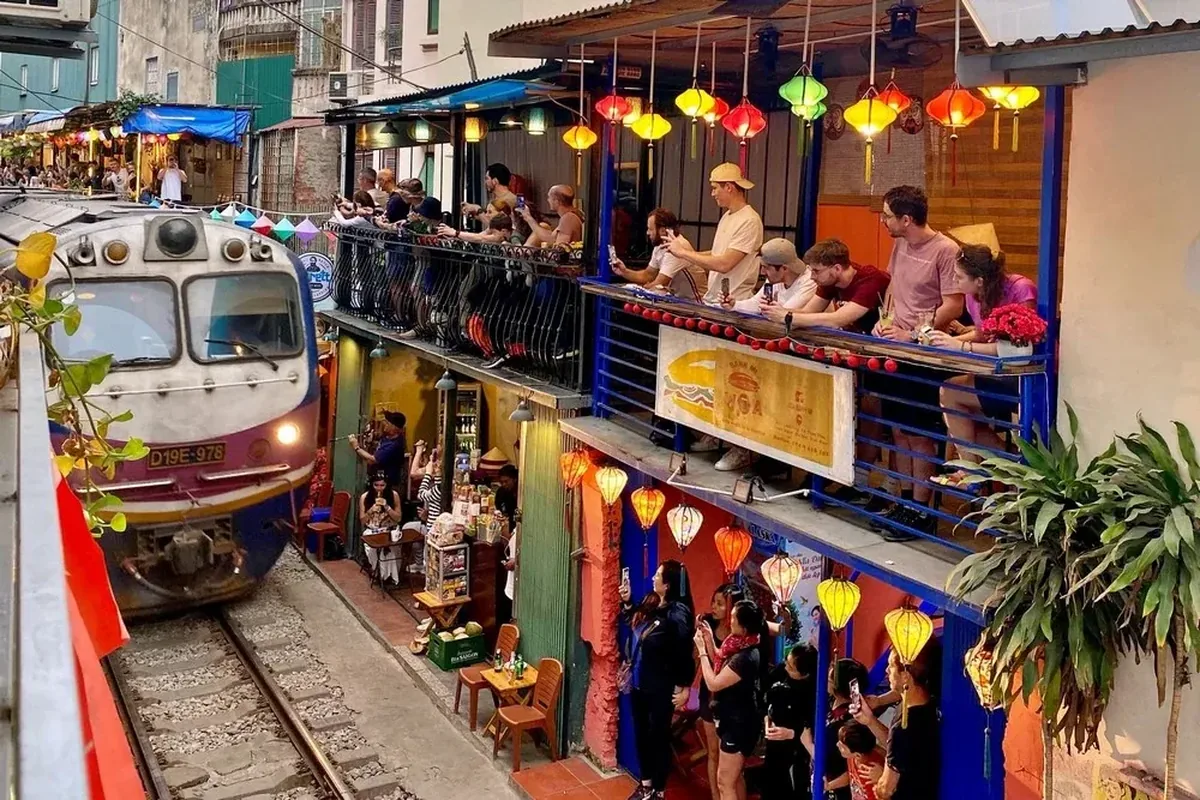
Until a train approaches, the tracks function as an extended front porch. Grandmothers shell green peas and prepare morning broths while sitting on wooden benches between the rails. Children play hopscotch across wooden railway ties, roosters peck between the crushed granite ballast, and neighbors converse across the tracks without raising their voices. Then, ten minutes before a scheduled pass, a bell rings from the crossing post. In an instant of practiced choreography, plastic tables and chairs are folded flat, laundry drying racks are pulled into narrow entryways, and resident families usher visitors inside their doorsteps. Seconds later, a 70-ton diesel-electric locomotive rumbles past, filling the corridor with the deep roar of steel wheels and the blast of warm air.
Experiencing this sudden transformation offers a visceral insight into Hanoi's pragmatic urban resilience. For local residents, living on the tracks is not a novelty; it is an everyday reality shaped by historical housing shortages, railway employment, and community cohesion.
Current 2026 Train Schedule (Estimated Arrival Times)
Because these are mainline passenger and freight services traversing hundreds of kilometers from coastal cities like Da Nang and Hai Phong, trains may occasionally run 10 to 25 minutes early or late. Always arrive at least 30 to 45 minutes before these estimated times:
- Monday to Friday (Predominantly Evening Passes):
- 19:00 — Northbound passenger service arriving from central Vietnam.
- 19:45 — Southbound express departing Hanoi Central Station.
- 20:30 — Evening sleeper service heading toward Da Nang.
- 22:00 — Late night passenger express.
- Saturday & Sunday (Daylight & Evening Passes):
- 06:00 — Early morning local passenger service (soft dawn light).
- 09:00 — Morning service (popular with early morning walkers).
- 11:30 — Midday passenger train.
- 15:30 — Prime photography pass: clear afternoon natural light.
- 17:30 — Golden hour pass: dusk light illuminating track reflections.
- 19:00, 20:00, 21:00 — Regular evening sleeper services.
Understanding the Checkpoint System (How to Enter Legally)
Due to safety concerns and overcrowding incidents in 2019, Hanoi municipal authorities erected metal security barricades and posted transit police at major crossing points—notably where Tran Phu Street crosses the tracks and at the intersection of Dien Bien Phu. Understanding how the system works prevents frustration:
- Do Not Push Past Police Barriers Uninvited: The police officers stationed at the barriers have instructions to turn away unescorted tourists who attempt to walk along the tracks for casual selfies.
- The Cafe Escort Protocol: Local cafe owners along the track have business registrations and official safety agreements. Cafe staff stand near the police barriers. When you approach, a cafe host will greet you and ask if you would like to have a drink at their venue. Once you confirm, the host escorts you past the barrier directly into their establishment. The police permit entry under this escorted system because cafe owners assume legal responsibility for their guests' safety.
- Choose Between Tran Phu vs. Phung Hung:
- Southern Section (5 Tran Phu): Slightly wider track bed, older multi-story colonial buildings with rooftop vantage points, and a wider selection of drinks and light snacks.
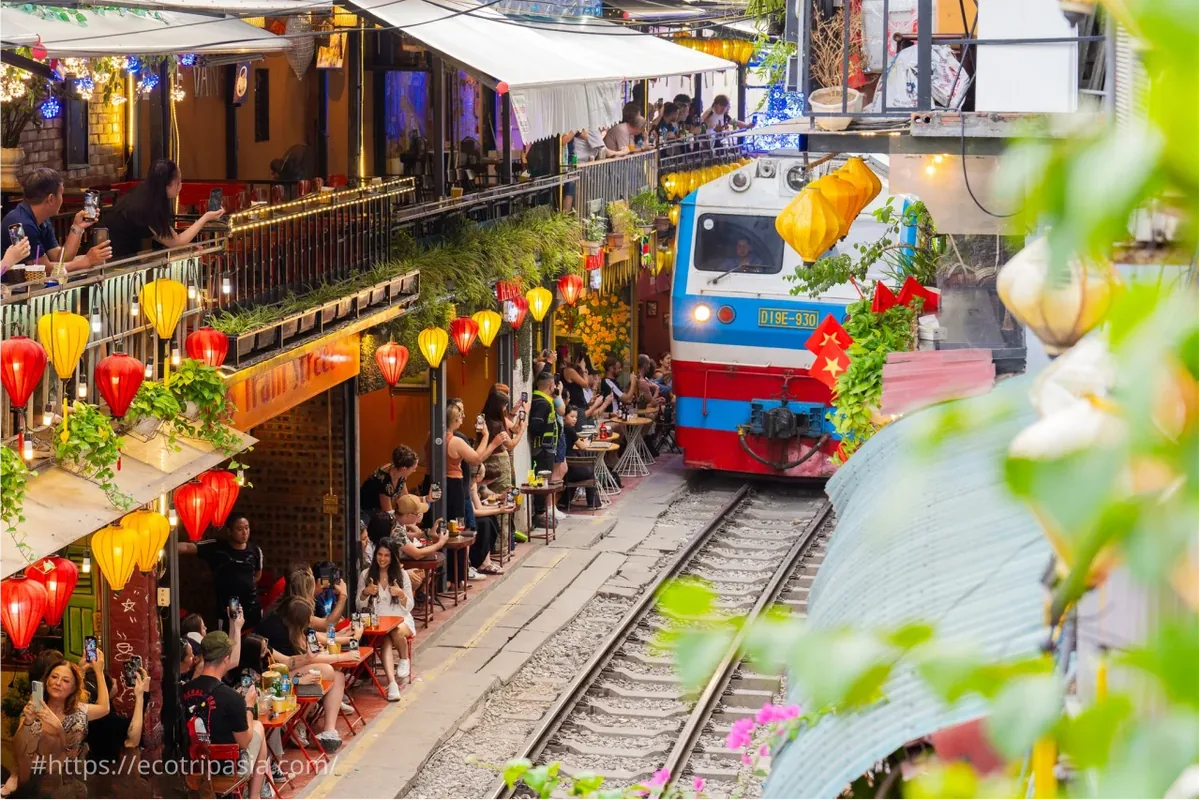
- Northern Section (Phung Hung): Narrower corridor, closer to the Old Quarter, decorated with overhead silk lanterns, highly atmospheric for evening photography.
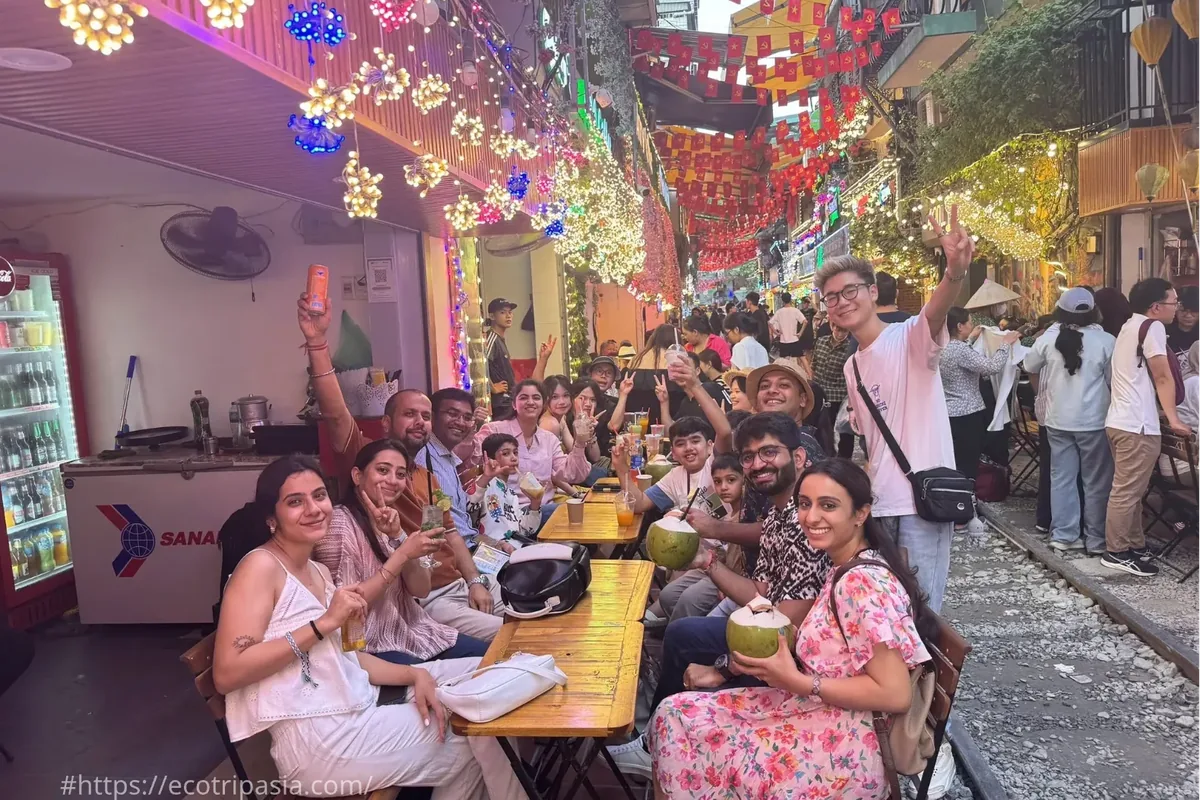
Photographic Gallery: Moments on the Rails
Essential Safety Invariants: How to Be a Responsible Guest
This is a working mainline railway, not a staged theme park attraction. To keep Train Street open for resident families and future travelers, observe these absolute rules:
- Obey the Yellow Clearance Line: Every trackside cafe paints a bright yellow line on the pavement approximately 60 centimeters from the outer rail. When the train warning bell sounds, you must place your feet entirely behind this line.
- Keep Your Back to the Wall: When the train passes, stand with your back flat against the building facade. Do not lean forward to take selfies or extend your phone into the clearance corridor; train cars sway slightly and exterior door handles or ladder rungs protrude outward.
- Watch Small Children Continuously: If visiting with young children, hold them firmly in your lap or keep them inside the enclosed cafe interior during train passes.
- Respect the Tracks: Never place coins, bottle caps, or rocks on the rails. In addition to being illegal under Vietnamese railway safety laws, stones can be thrown outward with dangerous velocity by locomotive wheels.
The Rooftop Advantage: Ground-level seating gives you the visceral vibration of the train passing inches away, but the second and third-floor balconies at cafes like Hao Hao Coffee or Railway Cafe 55 offer an unobstructed panoramic view of the train curving through the residential canyon without crowd obstruction. Head upstairs upon arrival to claim a front balcony table.
Experience Train Street with Guaranteed Access
Eco Trip Asia incorporates verified Train Street visits into our open-top vintage army jeep tours and guided cultural walking routes, coordinating directly with resident hosts for reserved trackside seating.
All tours operated directly by Vietnam Green Travel Co., Ltd (Licence 01-3022/2025/CDLQGVN-GP LHQT). Transparent flat pricing with zero booking markups.
Frequently Asked Questions About Train Street
Is Hanoi Train Street open or closed in 2026?
The railway line is fully operational. While local police barricades stand at major road intersections (such as Tran Phu and Dien Bien Phu) to prevent chaotic crowds, visitors are permitted to enter when escorted by a licensed local cafe owner to sit inside a trackside establishment.
What time does the train pass Train Street on weekdays?
On Monday through Friday, main passenger trains typically pass in the evening around 19:00, 19:45, 20:30, and 22:00. Occasional freight trains pass during mid-afternoon hours, but passenger services operate predominantly after sunset.
What is the train schedule on Saturdays and Sundays?
Weekends feature significantly more daylight services: usually 06:00, 09:00, 11:30, 15:30, 17:30, 19:00, 20:00, and 21:00. The 15:30 and 17:30 passes offer the best natural daylight for photography.
Do you have to pay to enter Train Street?
There is no official entrance ticket. However, because you enter via a trackside cafe, you are expected to order a drink (such as an iced coffee, fresh juice, or beer), which generally costs between 35,000 and 60,000 VND ($1.40–$2.50 USD).
How close does the train actually get to the cafes?
The train passes within 20 to 50 centimeters (8 to 20 inches) of the cafe doorsteps and outdoor stools. Before each arrival, cafe owners fold tables, bring all stools inside the yellow clearance line, and instruct guests to keep their backs pressed firmly against the wall.
Nearby Sights to Combine with Train Street
Within a short 10-minute walk or brief taxi ride: